

How Aspect Ratio Changes the Story in Landscape Photography Composition
Aspect ratio is one of the most powerful but overlooked tools in landscape photography composition. The shape of the frame changes how the viewer experiences the scene and how the story unfolds.
Quick Summary
Landscape orientation → “Look at this place”
Portrait orientation → “Stand here with me”
Square crop → “Look at this thing”
Panoramic → “Look how big this place is”
Introduction
I’m writing this in reflection of a recent learning with regard to crops, and aspect ratios. Growing up with an interest in landscape photography I had, like many others, a photography idol. My photography idol was Joe Cornish, an absolutely exceptional photographer. I always remember that he took a majority of his shots in portrait orientation, which was unusual I thought.
Now, writing this blog post, I walked over to my bookshelf and pulled out two of his books. Opening the books again immediately put me back in my younger self’s mindset. It’s strange how powerful that kind of nostalgia can be. Anyway, I would say around 70% of compositions were framed in the portrait orientation. I concentrate on crop and aspect ratio here, but I just want to note the mastery of guiding the eye through use of layers is exceptional.
However, there is fair use of both landscape and square crop in his books as well which made the books really helpful to cement my understanding of crop and aspect. One of the simplest but most powerful ideas in composition is this: The eye tends to follow the longest edge of a frame. So, in landscape, your eye would travel from left to right, and in portrait, from bottom to top. That’s interesting, right? It helps us tell the story, express the vision and guide the eye.
But let’s back up, how do we do this?
What Does Landscape Orientation Make the Viewer Feel?
Everything in the frame is ours to control as a photographer, including where the frame is. Landscape orientation is called landscape because it’s how your eye usually scans an environment. Imagine for a moment you get out of your car, at a lake and you’re presented with a view, subconsciously you would look left and scan around the scene to the right. In doing so you appreciate the expanse, you read the scene and it feels natural in doing so. In person, a person’s field of view is wider than it is tall, so you can almost replicate this feeling of standing where the photographer was by using a landscape orientation.
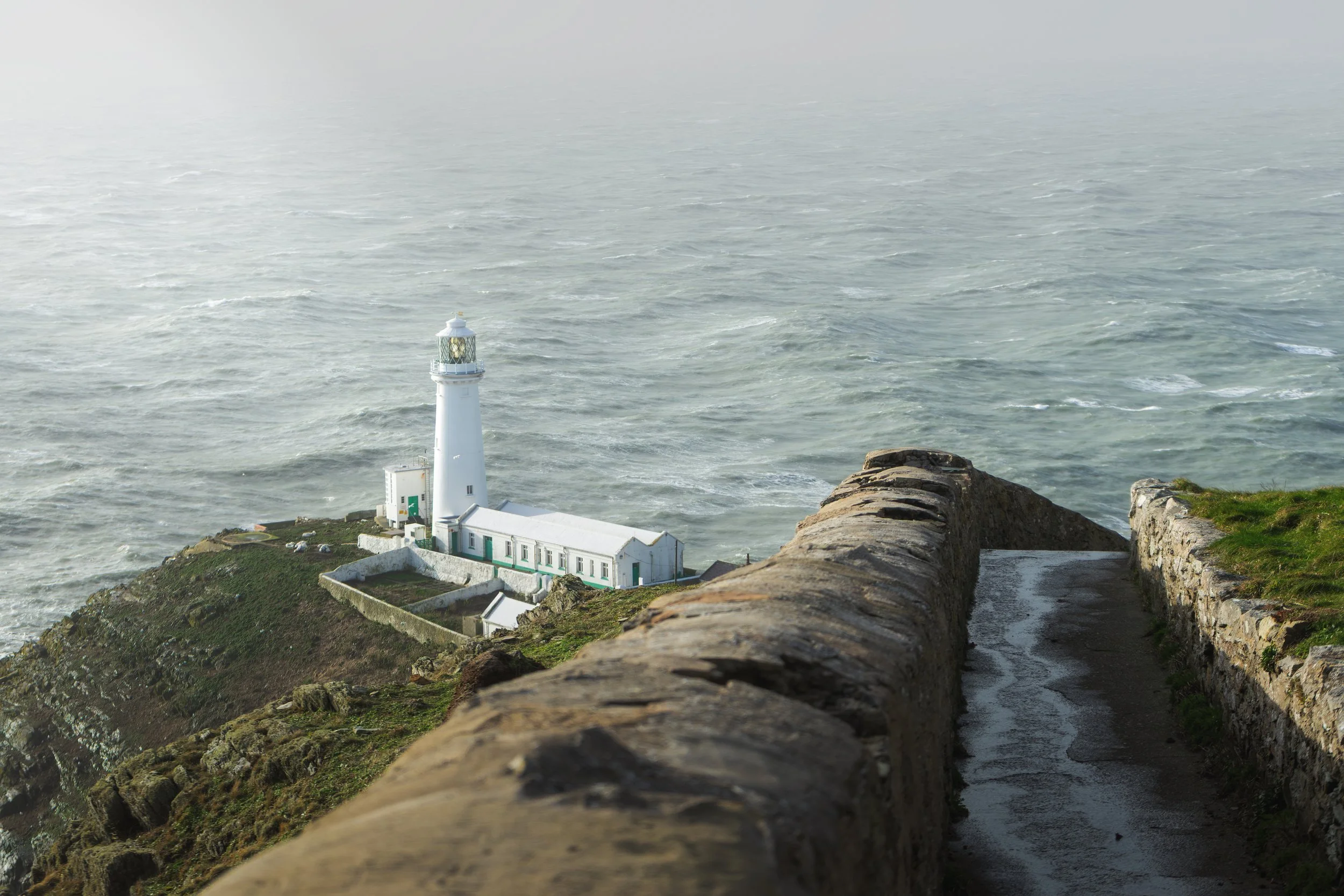
This landscape orientated picture is a good example of showing the viewer a vast view, but deliberately guiding the eye across the frame to the lighthouse. It still preserves its fore ground, mid ground and background arrangement.
What Does Portrait Orientation Make the Viewer Feel?
What about the portrait orientation? The way I helped myself understand the feeling, and I’m sure some of you will relate, is that feeling when you’re standing at the foot of a mountain, you might have done a mild approach, you feel out of breath, but you look up, from the ground you’re standing on, to the top of the mountain. You might feel intimidated, you might feel anticipation, but you definitely feel connected to what you are about to climb. The viewer of that photograph — taken in portrait orientation — sees the ground you’re standing on all the way to the sky above the mountain. It feels like they are there with you. Their eye follows the same upward journey and, if done well, they will feel the same emotion.
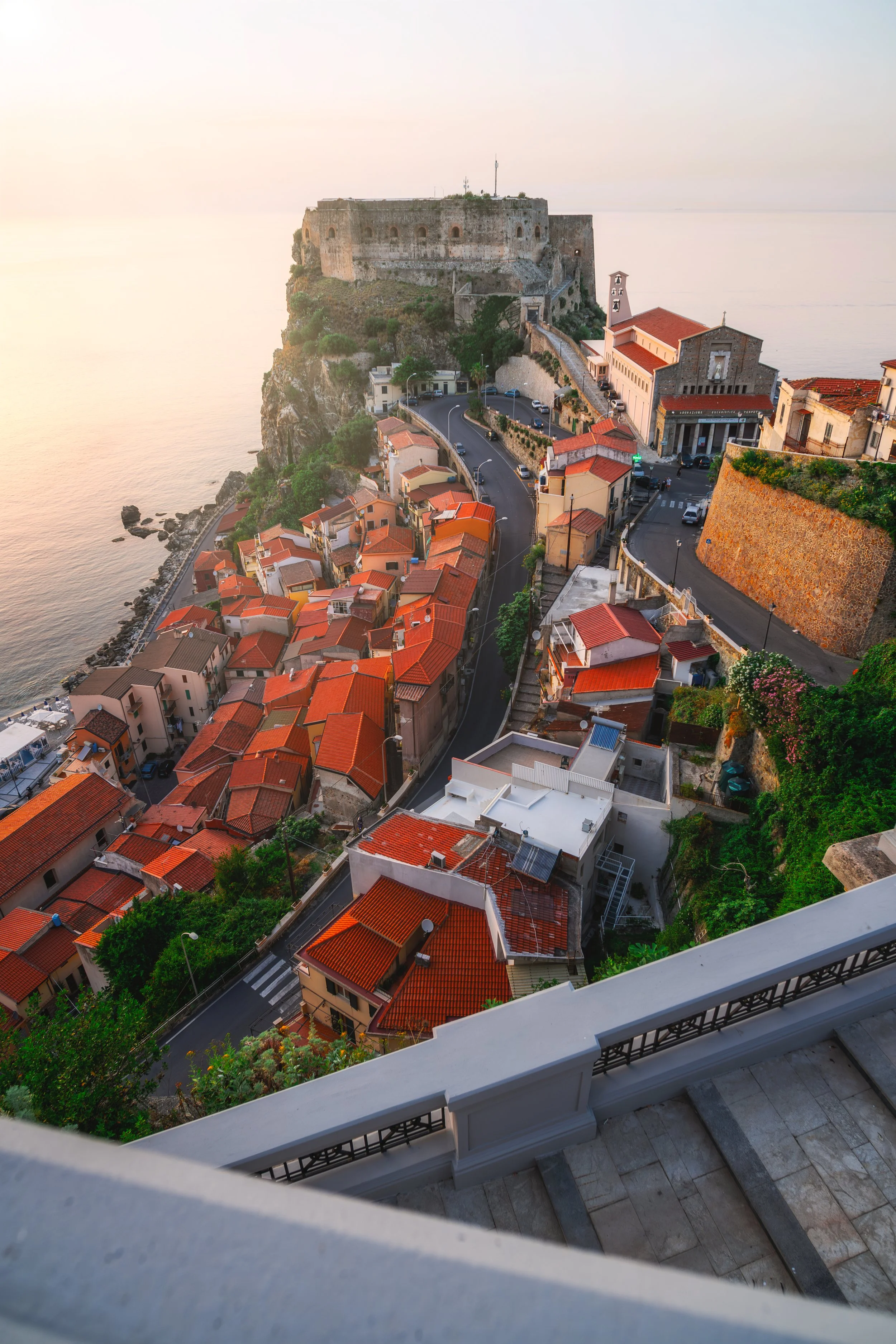
This portrait oriented photo makes the viewer feel like they are there, looking over the same rail, down the same set of steps, across the same landscape into the sunset.
When Should You Use Square Crop in Landscape Photography?
So, what if there is no long side, and we use a square composition? Well this is also quite interesting, the eye doesn’t follow a side. Some people say the eye circles the subject in a square frame. I prefer to describe it as loitering. I don’t circle but I definitely stay close to the subject in the middle. And it’s that last bit that hammers this one home, if you find a composition lending itself to a central subject, you might want to try looking at it in a square ratio. Square compositions are particularly effective in minimalist landscape photography. Lone trees and simple landscapes are just a few examples that work well in a square crop.

Although more abstract, this shows good use of a square crop, a simple pebble in the centre, where your eye is drawn.
When Should You Use Panoramic Aspect Ratios?
The final thing I want to discuss is the panoramic aspect ratio. Panoramic compositions emphasise the scale of the landscape and reduce emphasis on the foreground. Rather than the eye following a fore, mid and background style layered photo, the eye rather looks for a horizontal story. This might be for example on the coast, beach, water, lighthouse, sunset, where the eye moves across the elements to read the story. In a panoramic frame, the subject is often smaller within the scene, which makes the landscape itself feel larger and more dominant.
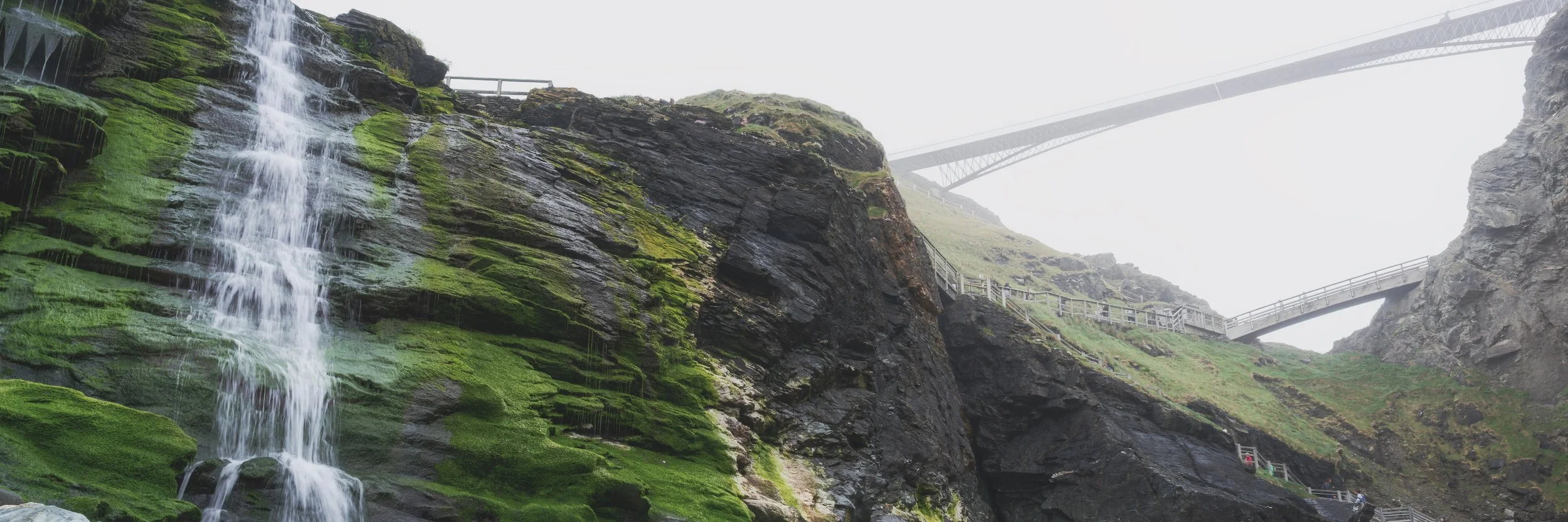
This panoramic is less traditional, but shows its power in emphasising expanse and width of a landscape. Here the viewer is guided through the amazing scene taken on a beach, with waterfall on the left, but massive cliffs with connecting bridges over head.
Final thoughts
Aspect ratio is more than just a crop. It changes how the viewer experiences the scene and how the story unfolds. Whether you choose landscape, portrait, square, or panoramic framing, the shape of the frame influences how the viewer’s eye moves through the image.
