

“What is my subject?”
I am really challenging myself to be a better photographer, and part of that is being mindful, reflective and critical.
As part of this process, I’d like to talk about my trip to camber on Saturday morning for sunrise. The forecast was light rain, but I went out regardless, mainly inspired by what Thomas Heston said, there is no bad light, you just need to shoot the right subject in the light.
Now on that morning, I arrived, as normal 1 hour before sunrise. I wanted to use the dunes as my subject but upon arrival realised in the light and direction I couldn’t really find a good composition. And at this stage, my composition technique was find a subject, find the light, compose the subject, mid and foreground. But on this morning, no subject, no composition, but good light. I panicked, I was flustered.
I kept saying to myself, “what is your subject?”
I scoured the beach and took some frames that had good composition but didn’t really make best use of the light. Only after the light faded, did I manage to relaxed into the environment and get some good shots. I had taken a seat on the beach, I had some water, I sheltered my self from the now starting rain under a dune. I just sat there and absorbed the feelings. And I felt different things looking in different directions and these became different frames.
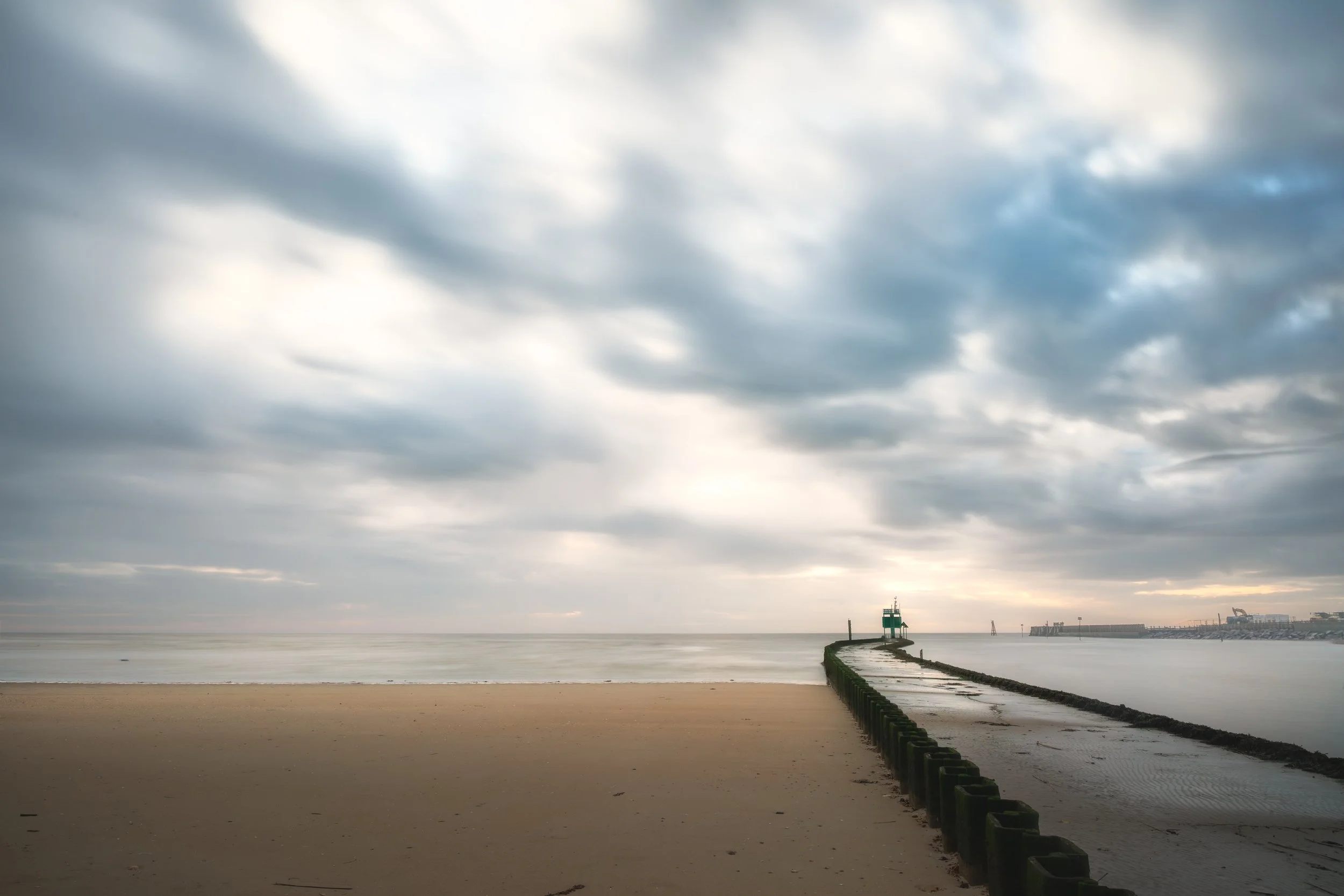
One of the compositions I noticed whilst sitting on the sand, in the rain.
I got home, pleased, but, knew I must be missing something and so I went looking for inspirational shots of sand dunes, and one really got to me, this image was captivating, emotionally provocative, I liked it. Problem was, no obvious subject.

I found this on Pinterest, no link, description or name which is odd. Honestly not sure if its even real in this day and age, but I caught my eye.
So sitting here writing this in reflection, what is subject? Landscape photographers commonly talk about telling stories with your photographs, literal interpretations of this are common and perhaps wrong, ultimately we need to understand ourselves in the present place and time (I’m not usually this deep, just writing this feels unnatural to me, but I guess that’s part of moving outside of my comfort zone).
So the subject? Maybe this should be the story as others would put it? In my case could have been, lack of something, it could have been a feeling or emotion, the subject, I suppose is the landscape and we tell its story through photography.
I tried to pin point it, was the sand the subject? The footprints? Maybe the grass? But I concluded two things:
The sea was the subject, my eye is drawn to it, despite it being out of focus
The feeling or ‘story’ is most important
And that took me back to all the YouTube photographers I watched talking about telling stories. So this got me pondering, even more, what is a story in photography? Literal interpretations of this are common and perhaps wrong, so I consulted GPT. I’ll save you the bother, in short, its not simple, but we can use a phase to broadly cover it “What does this leave room for?” but to me that was very vague, almost as vague as “tell a story”. So after a bit of reading, every photographer might answer this differently, some examples that are relevant in my opinion:
This leaves room for… Emotional readings
This leaves room for… Personal memory
This leaves room for… Mystery
And I have picked these deliberately, because my interpretation of the aforementioned image does these for me. I grew up on the coast in an area where sand dunes were common, I spent many a holiday on a beach also, lots of memories there for me to draw from. But of course, I like quite beaches, ones I have to myself, so this played a part, the point of view is not knowing if the sand is packed with families, or even f the beach is warm or cold. Is it calm? I think so, but not so sure, making it a little mysterious… I could go on.
So I think this helps me understand that the question in my head should maybe not be “what is your subject?” but rather “what does this leave room for?” or maybe, I should just worry less, and just take the photos I like, and most importantly, settle into the scene and don’t pressure yourself, pressure is no good for creativity!
