

Photographing Rye Harbours Mouth, UK
Rye harbours mouth is quite a unique location for us photographers, it has two sides, as you would expect any other harbour mouth to have, but being on the south coast it has a East and West side. Yep you guessed it, an amazing location for both Sunrise and Sunset potential. Not to mention the beautiful subjects located along its historic beaches and channels.
Above, parking location at Camber Sands Car park, walk along the beach to the harbour mouth.
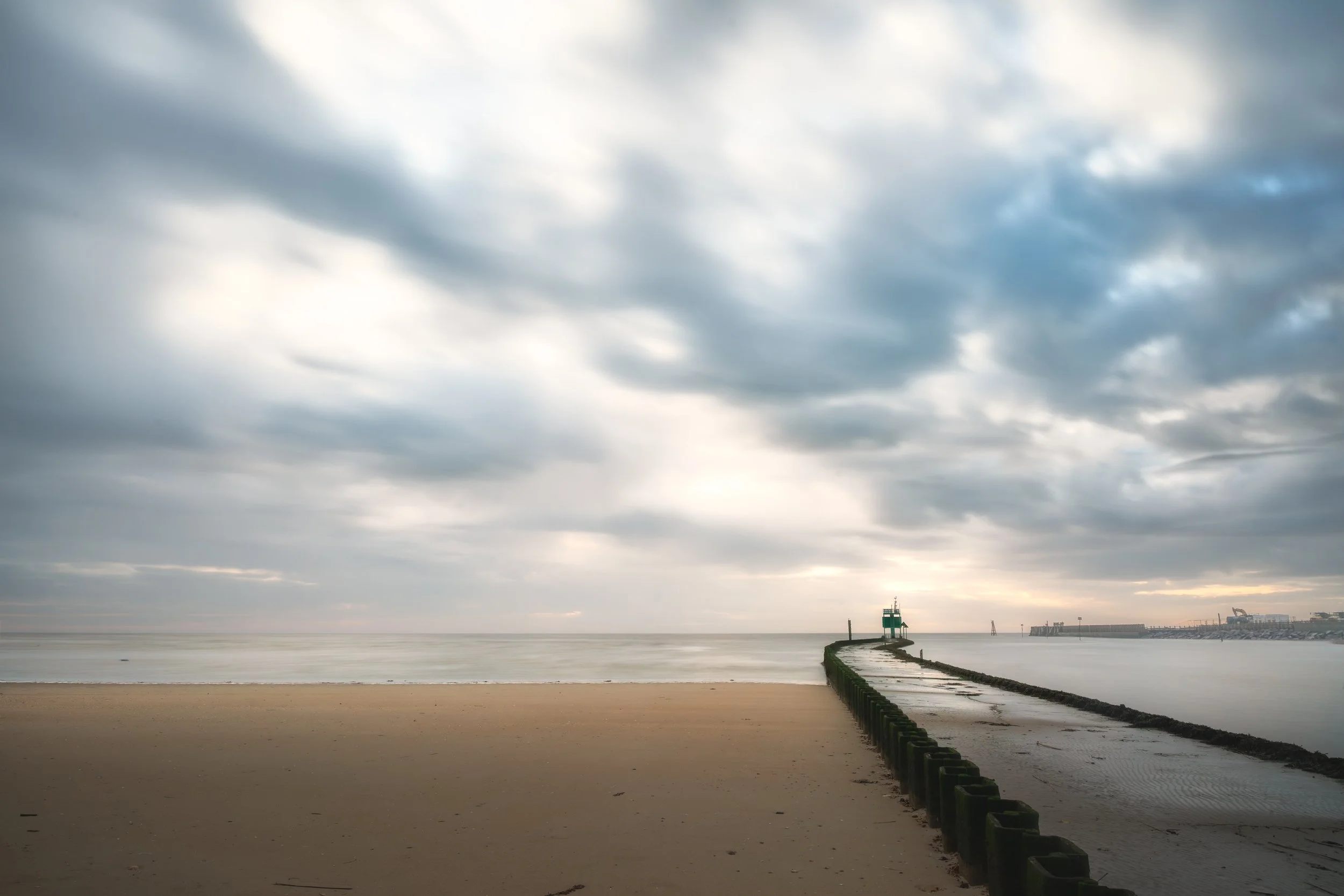
Camber sands side (East), of the Harbour mouth
However, unlike most harbours, Rye harbour is both tidal and quite a long way inland, meaning that you need to pick a side and drive to it, if visiting the Camber sands side (East) I find it best to park in the Camber Sands beach car park. However, if you want to visit the West side, the car park and location is called Rye Harbour Nature reserve. This side is quite busy for bird watchers, dog walkers and ramblers, but don’t let it put you off, the further down the path you go the more spread out people become and on the beach at the harbour mouth your quite likely to be alone.
After about a 10 minute walk from the car park you will arrive on the beach, there is machinery and there is a gate that may be closed, keep walking round past them for access to the beach. On the way there are a lot of interesting things to photograph, if you have the time, stop and enjoy them. Those weathered wave breaks, the WWII pill boxes, that strange red roof hut, all are very interesting.
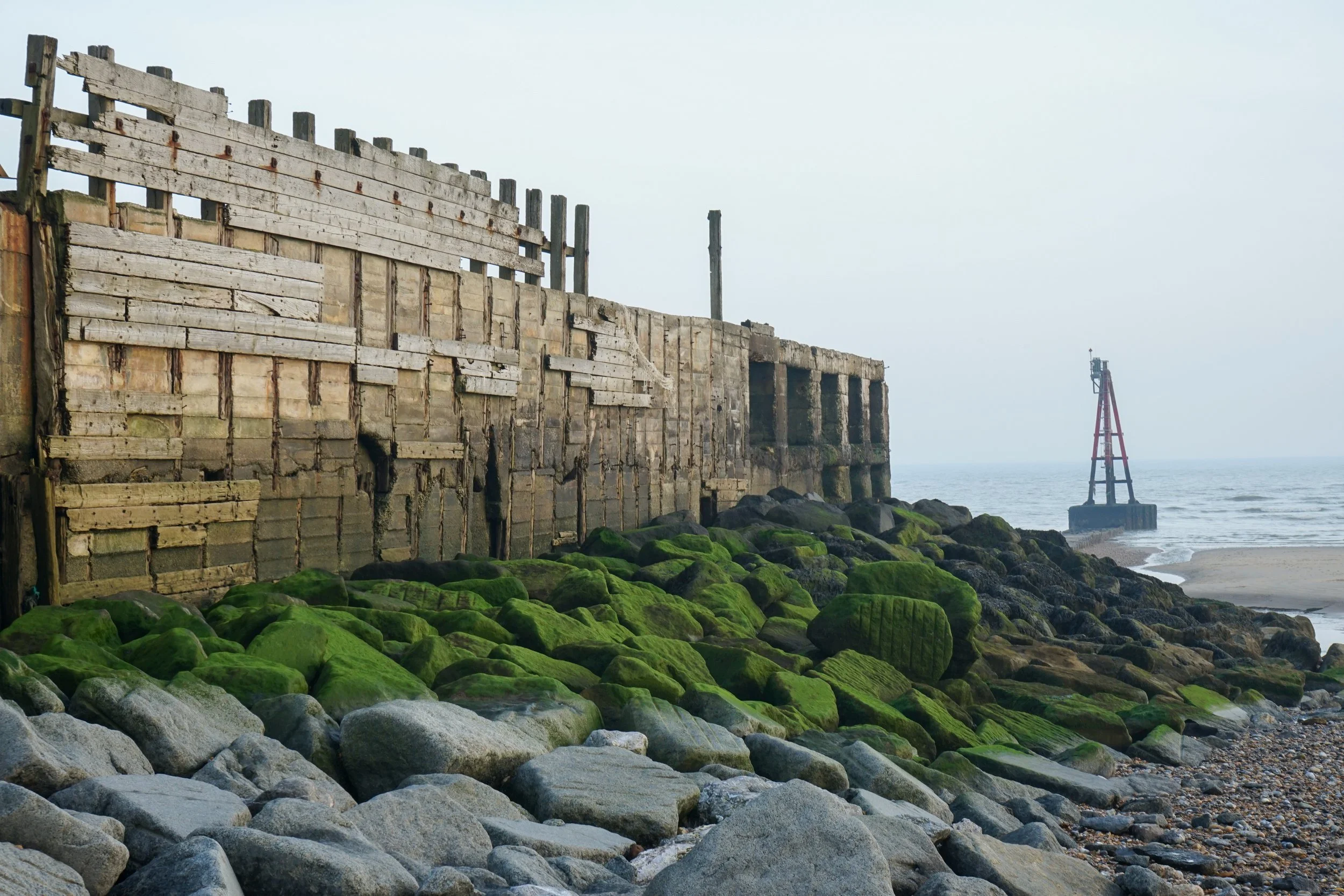

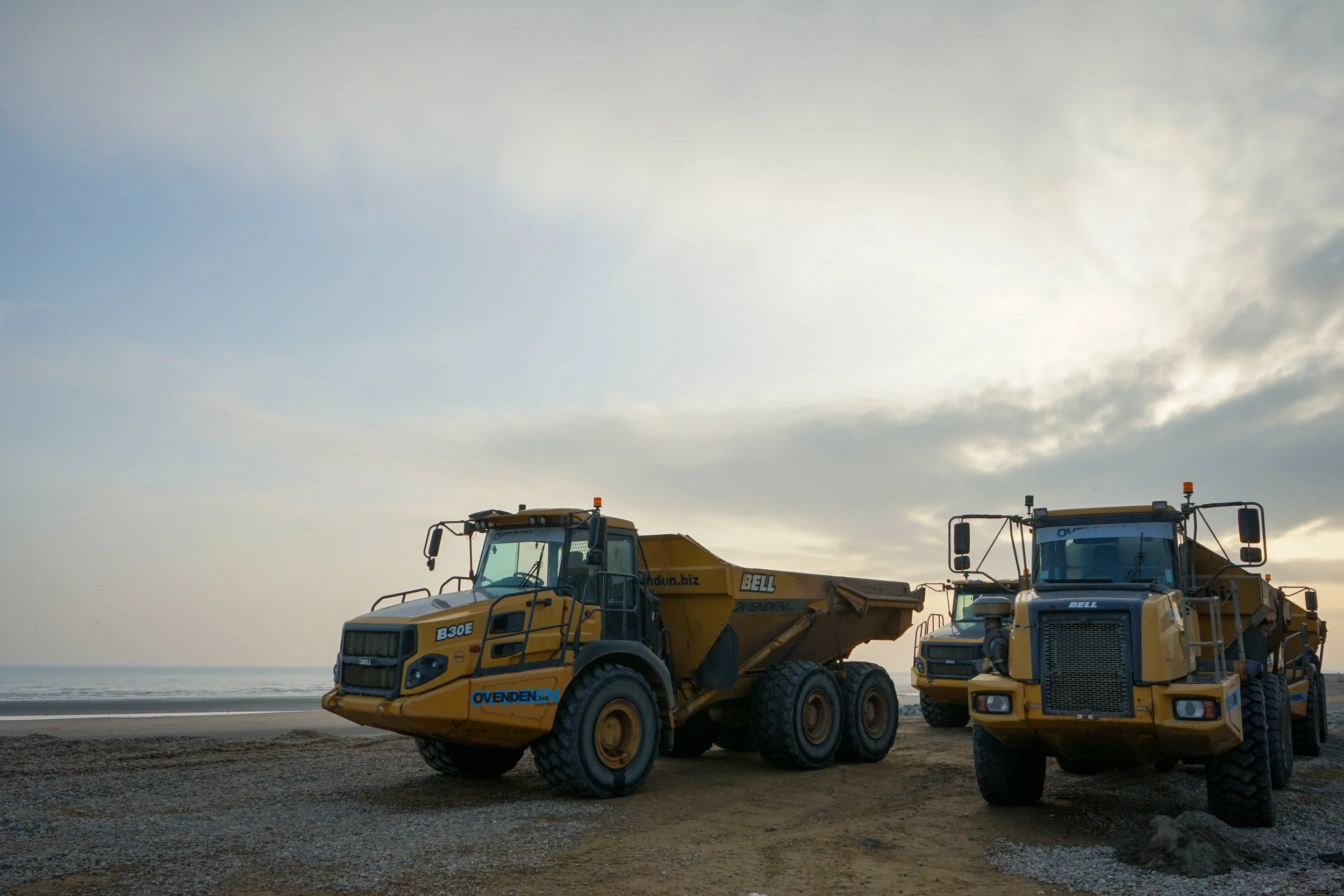
Above, parking location at Ray Harbour Nature reserve car park, walk along the foot path towards the beach.
Once on the beach you will see a collection of boulders, leading the eye to a the end of the harbour wall, this leads the eye to a harbour arm, and on the end of the arm, a harbour marker. When I last visited the harbour I was at lowish tide, an hour and a bit before sunset and it was almost an perfect full moon. My chances were good, I knew what I wanted, but, I cannot emphasise enough how much you should scout this location. There are almost endless compositional opportunities that change dramatically on weather, and it’s good to know your options.
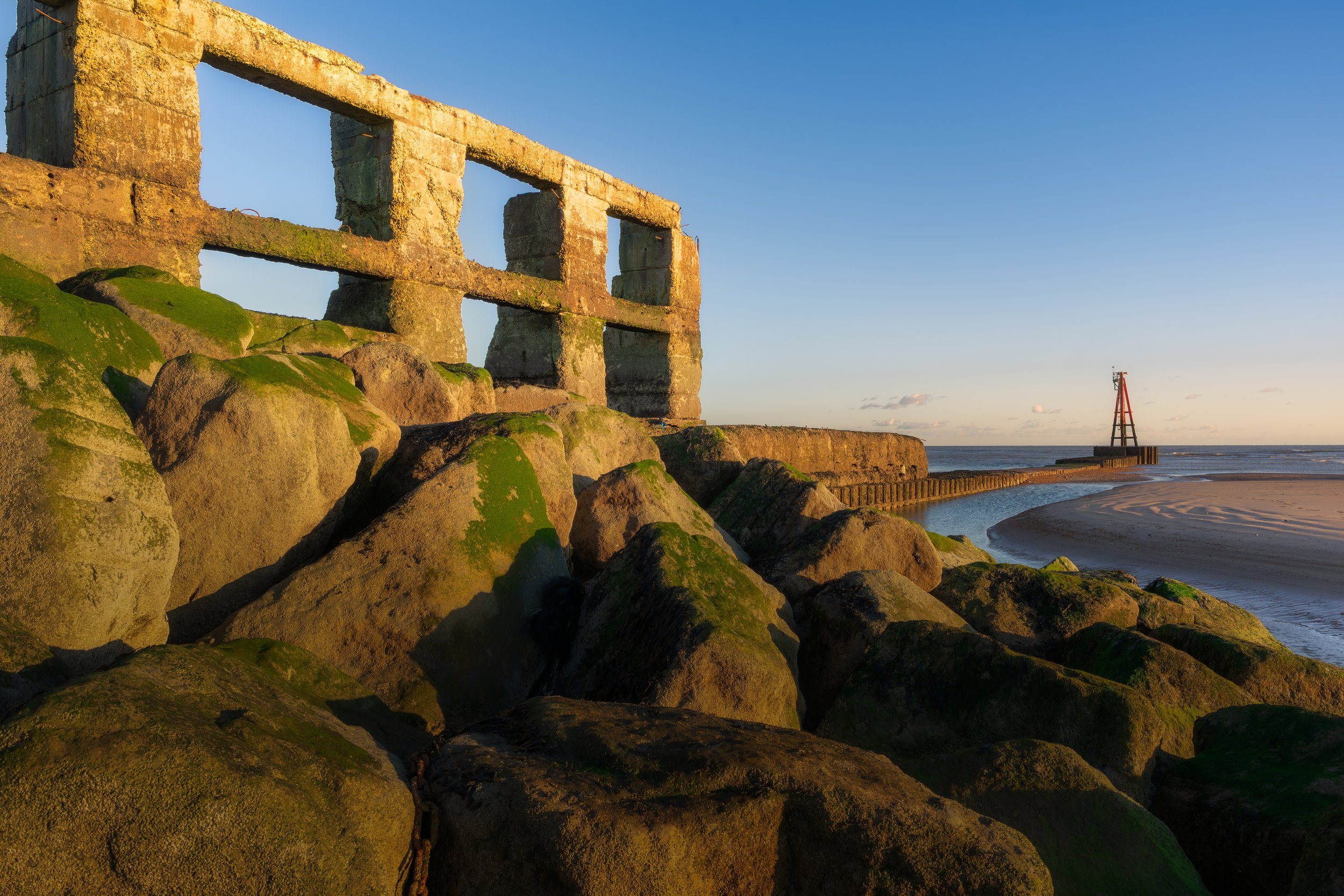

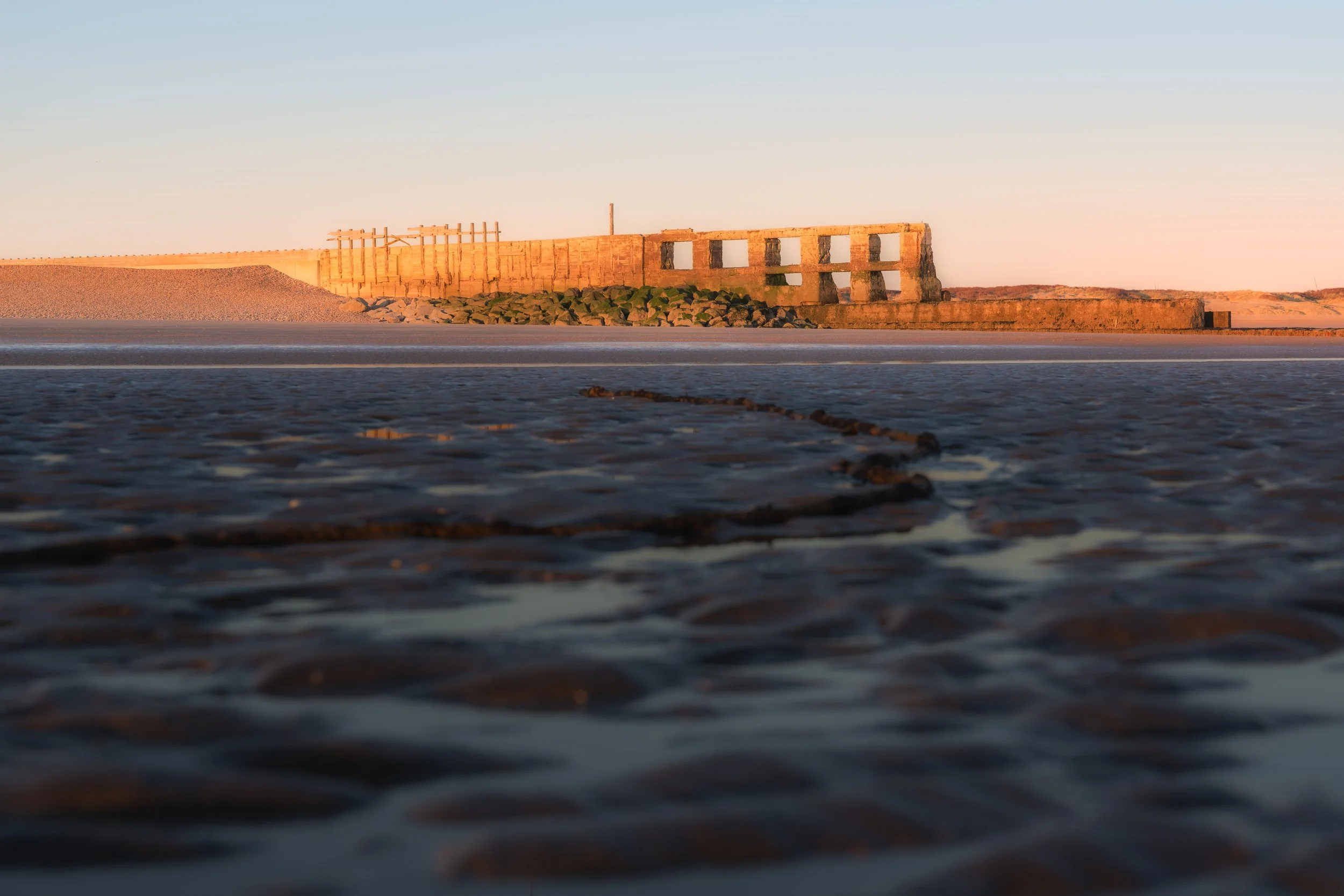
During sunset, it’s common for the top of the harbour wall and beach to be lit, whilst the sand and dunes remain either in shadow or not directly lit.


Once the direct light fades, blue hour is where the place really settles down—cool tones, calmer contrast, and (if you’re lucky) the moon hanging over the marker.
